
Wythe Projected Versus Actual Release
A projected release date is a working calculation. It estimates when lawful confinement should end if the known sentence, jail credit, earned-credit class, court orders, and custody events stay the same. An actual release date records the completed exit from the reporting custodian. The two should not be treated as interchangeable. VADOC procedure permits staff to confirm a current projection, but the public locator does not promise a screen field with that exact label.
A pretrial Wythe detainee usually has no sentence-based release date. Bond, recognizance, dismissal, time served, or a later court order can change the custody status. A sentenced person may have a date, yet the responsible calculator depends on whether the term is local or state-responsible. A person can remain physically at New River Valley Regional Jail while VADOC computes a qualifying state term. Facility location alone does not answer who owns the calculation.
Find a Wythe Inmate Release Date
Begin with the custody path, not a sentence calculator found elsewhere. The official systems divide local jail custody, state-responsible custody, and community supervision. Each can display a different piece of the timeline. A current jail lookup confirms local placement; the VADOC locator covers current state custody or supervision; the sentencing court supplies the legal sentence; and the calculating authority can confirm the current projection.
- Search the NRVRJ inmate hub and its official IML for local custody or a completed Release Date.
- Review the Wythe court docket for the active sentence, suspended time, jail credit, amendments, or a later order.
- Use the VADOC Inmate and Supervisee Locator for a state-responsible person.
- Ask NRVRJ or VADOC who performs the computation for that sentence and request the current date from that authority.
- After the date arrives, confirm the completed event through the jail, VADOC, VINE notice, or final release documentation.
The locator uses the first three letters of a first name with the full last name, or a seven-digit DOC number. Optional location, race, sex, and age filters can narrow results. A district office means community supervision, while an institution or regional jail means custody. The Wythe County released-inmate record path explains how to preserve proof after the live status changes.
The official VADOC locator shows the state search and its accuracy notice.
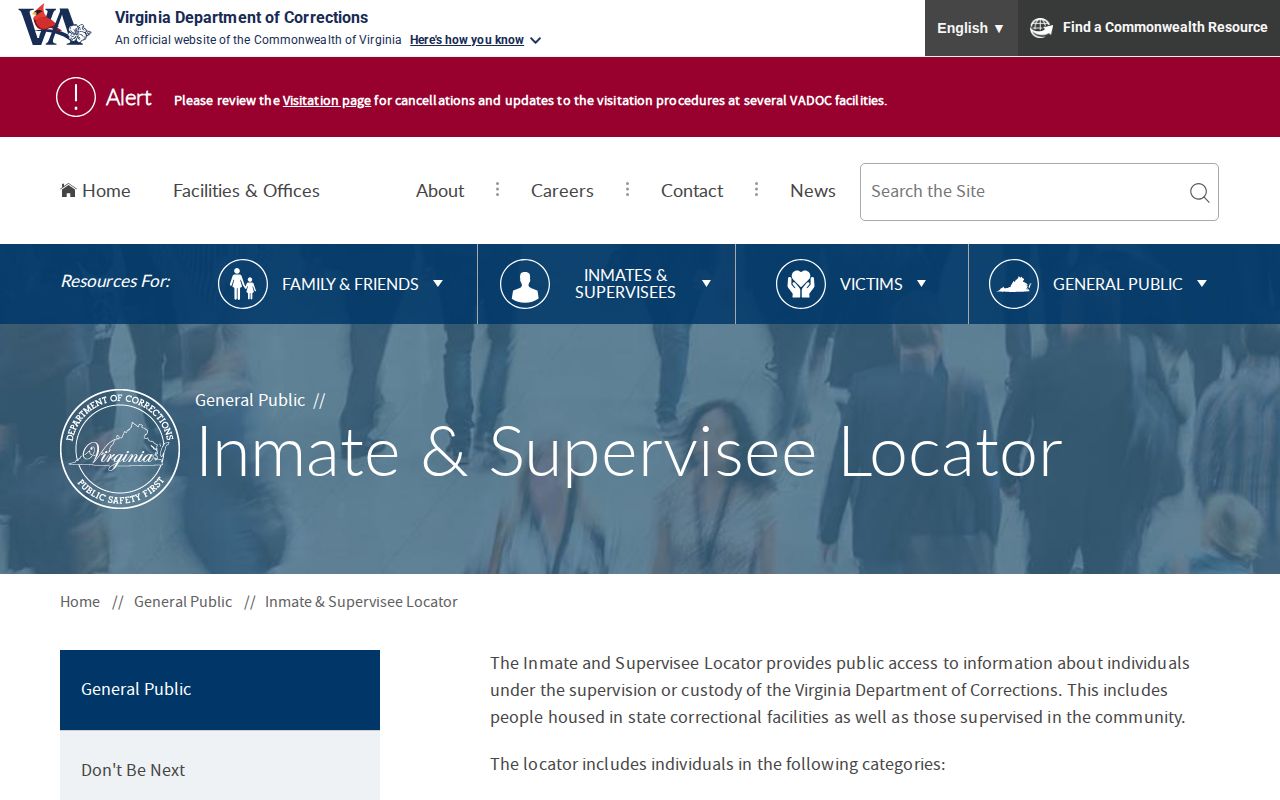
Use its result to identify custody or supervision, then ask VADOC to confirm the projection rather than inventing a field the public page does not promise.
Note: A district-office result means community supervision, not that the person remains confined in a Virginia correctional institution.
Who Computes Wythe Release Dates
VADOC assigns computation responsibility by sentence type and active time. Local authorities may calculate local jail sentences. VADOC calculates qualifying state-responsible terms, including active earned-sentence-credit sentences over twelve months. That division is easy to miss because a state-responsible person may still be housed at NRVRJ instead of a state prison.
| Wythe custody situation | Best source | What to ask |
|---|---|---|
| Pretrial NRVRJ detainee | Wythe court and NRVRJ | Current bond or release authority, not a sentence projection |
| County-only jail sentence | NRVRJ or sentencing court | Who calculated the date and which jail credits were applied |
| State-responsible sentence | VADOC | Current projected date and computation basis |
| Community supervision | VADOC district | Supervision status and discharge, not prison exit |
Do not compute an individual Wythe County date by subtracting a broad percentage from a sentence. Concurrent or consecutive terms, presentence credit, offense date, statutory category, and later orders all matter. If responsibility is unclear, ask NRVRJ and VADOC which agency owns the calculation before challenging the number.
A computation question should identify the active sentence and the part believed to be wrong, such as missing jail credit or an amended order. People in VADOC custody use the official Correspondence Unit and Court & Legal Section route described on the time-computation page. A family member or other requester may receive less detail because access depends on the record, requester, and law. The useful goal is an agency-confirmed projection or a clear explanation of which office can address it.
Wythe Release Dates and Earned Credits
Virginia uses different credit frameworks based in part on offense date. For felony offenses committed before January 1, 1995, the older Good Conduct Allowance system may apply. VADOC describes rates from zero to thirty days of good time per thirty days served, depending on class. Later felony sentences generally use Earned Sentence Credits and are generally outside discretionary or mandatory parole, subject to current exceptions.
Virginia Code § 53.1-202.2 defines an earned sentence credit as a one-day deduction and addresses eligibility. Under § 53.1-202.3, listed ESC-1 offenses earn no more than 4.5 days per thirty days served. Other eligible ESC-2 offenses can earn as much as fifteen days at Level I, 7.5 at Level II, 3.5 at Level III, and none at Level IV. Class depends on conduct and assigned-program participation and can change after review.
The phrase “serve 85 percent” is only an approximation for the limited-credit framework, not a universal Virginia formula. The older 4.5-per-thirty maximum works out closer to roughly 87 percent. Some ESC-2 offenses can earn more, while older sentences and parole exceptions follow other rules. The current offense-specific statute, sentence record, and official computation control.
The VADOC time-computation page describes these official rates and responsibilities.
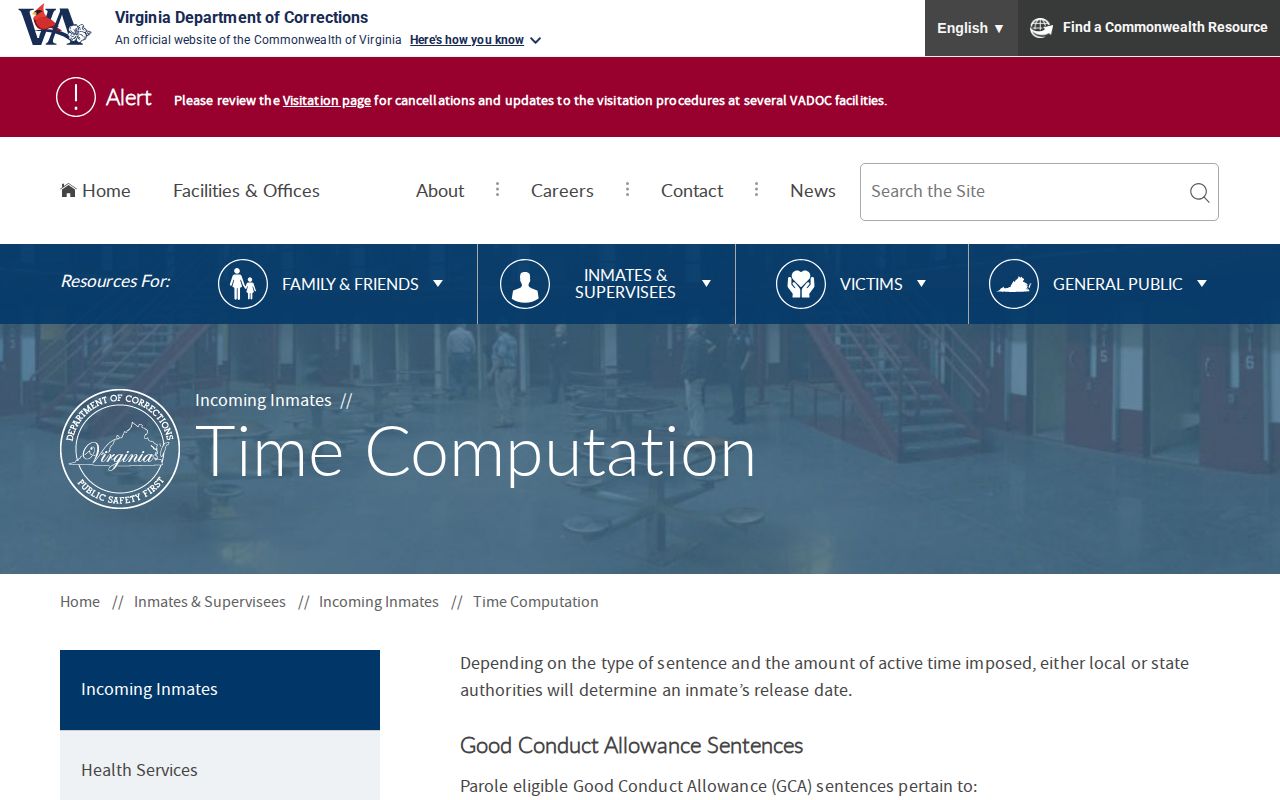
The rate chart provides a framework, but only the agency’s calculation applies it to one Wythe sentence.
Note: Credit rates depend on current statutory eligibility and classification, so a broad percentage cannot produce a reliable individual release date.
Why Wythe Release Dates Change
A projection reflects the inputs known at a given time. New orders, credit changes, disciplinary events, or custody obligations can alter it. Even when the calculation stays the same, the date someone leaves one agency may not be the date the person enters the community. A detainer is another authority’s request or legal basis to hold or take custody.
| Factor | Possible effect | Verification source |
|---|---|---|
| Earned-credit class change | Faster or slower credit accrual | VADOC computation record |
| Disciplinary event | Loss or change of credits | Official calculation and case process |
| Concurrent or consecutive structure | Terms overlap or run one after another | Sentencing orders |
| Presentence jail credit | Qualifying days reduce active time | Court and computation record |
| Court amendment or appeal | Sentence length or authority changes | Later court order |
| Detainer or transfer | Local custody ends without community release | Movement and receiving-agency records |
| Parole action | Board decision starts a later release-setting process | Board decision and VADOC release record |
A parole grant is not a same-day exit. The Virginia Parole Board records the decision, and VADOC sets release under the governing procedure. Similarly, a Release Date in the NRVRJ lookup may document exit from that jail while another authority receives the person. The destination must be checked before calling the event a community release.
Parole and Wythe Release Timing
Parole applies only where Virginia law permits it. Code § 53.1-165.1 generally abolished parole for felonies committed on or after January 1, 1995, while current exceptions cover defined situations. Older eligible sentences use rules in § 53.1-151. Geriatric conditional release has a separate path under § 53.1-40.01. These laws address eligibility, not proof that a release has happened.
The Parole Board’s public meeting calendar and monthly reports can show consideration and outcomes. They should be read with care. The Board uses “grant” and “not grant,” and a grant starts a later VADOC release process. A final release date can still account for statutory notice, paperwork, checks, another hold, and release planning. Do not convert a hearing date into an exit date.
Wythe Final Release Documents
VADOC’s facility-release information describes the final process, including record checks, documents, property, and transportation planning. That process demonstrates why a computed date and a completed release are two records. The projection guides preparation. The final transaction records what occurred after all required checks.
The official release page also explains what VADOC provides at the end of state custody.
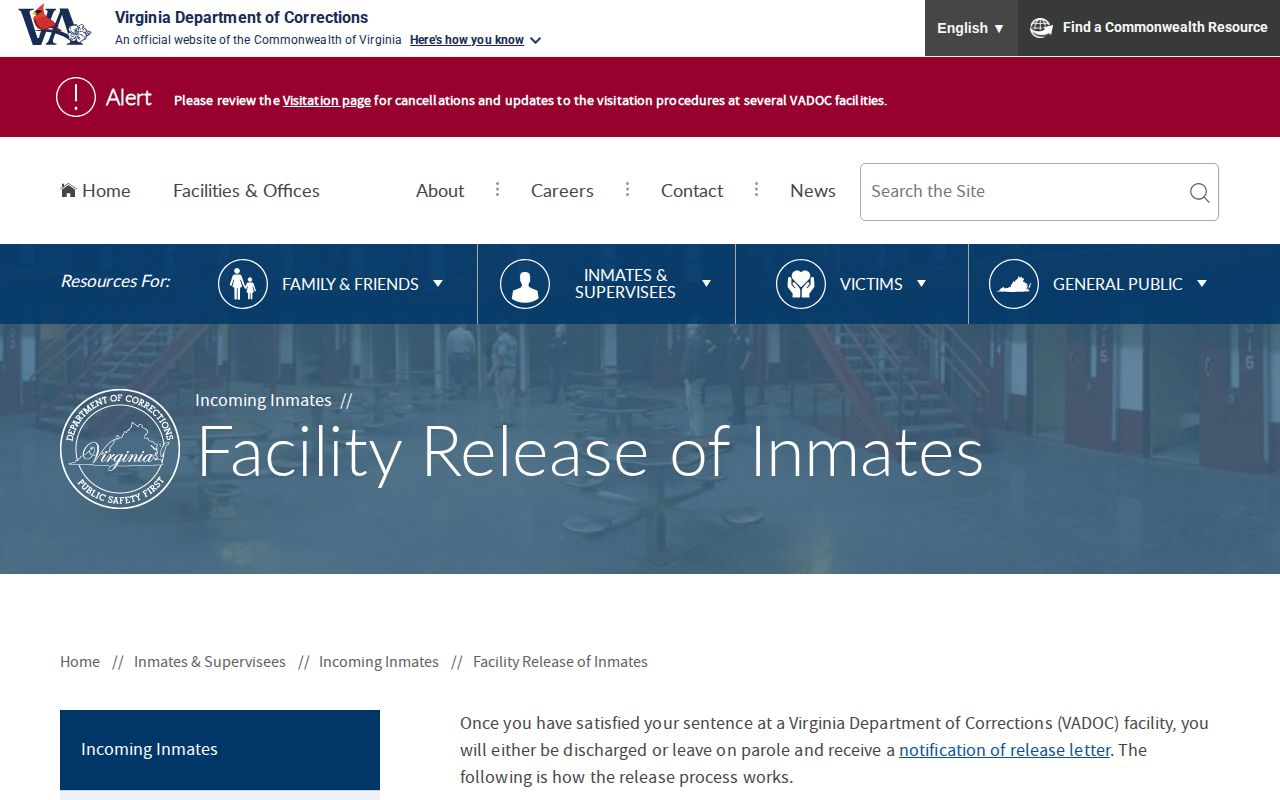
For a person leaving NRVRJ on a local matter, ask the jail for the release date, release type, and destination. For state custody, ask VADOC. A receiving hold can mean that one custody ended while another began.
Final processing can include identity and records checks, money or property handling, release papers, supervision instructions, and transportation planning. Those tasks explain why a date calculated in advance can differ from the recorded time of exit. They also show why a transfer should be labeled as a transfer until the receiving authority’s record is checked.
Confirm a Wythe Inmate Release
Virginia Jail VINE tracks participating local and regional jail custody events, while VADOC VINE has a separate state role. A local registration may not follow a transfer into VADOC. The Wythe VINELink release check explains how to select the correct agency record and distinguish a release notice from a transfer notice.
Save any alert, then verify it with the reporting custodian when durable proof matters. VINE is a notification system, not a certified historical archive. Agency transmissions may lag, and official guidance does not publish a lasting released-result period. For a past state term, VADOC’s inactive-record form may be needed. For a local term, request the NRVRJ release record and identify the person, approximate dates, Wythe agency or case, and exact existing record sought.
The NRVRJ IML can also help after the fact. Its name search includes an option to include released inmates, and observed results have a Release Date column. The jail does not publish how long released results remain, whether the displayed date was once projected, whether a transfer gets a date, or how often the field refreshes. Use it as a strong local lead, then request the release authorization or movement record when the exact type, time, and destination matter.
For a state term that has ended, VADOC Form 050-6F17 provides the inactive-record route. It requires an original notarized request and details used to identify the former record. Public correctional status information can include sentences, time served, release date, and parole-eligibility date, but other parts may be redacted or withheld. The final agency response is more reliable than applying a credit table without the complete sentence file.
A court docket adds legal context but may not show the physical exit time. Pair the final order with the jail or VADOC release document when both timing and authority must be established.
Note: Never treat the loss of a live roster result as proof of release because transfer, another hold, and data timing can explain the change.